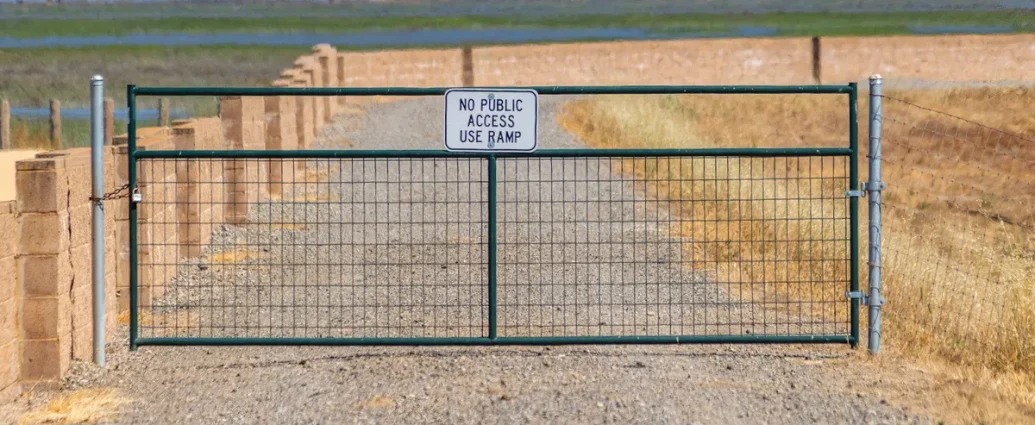
Last updated: October 24, 2026
Quick Answer: A sliding gate is usually the better choice for a ranch driveway when space is tight, the ground slopes, or wind pushes hard on a big panel; a swing gate wins when you have deep, flat driveway space and want simpler hardware with hinges and latch points that are easy to understand and maintain. For ranch driveway planning, the comparison in this Sliding Gate vs Swing Gate for Ranch Driveways: Which Is Better? article comes down to site fit, not a universal winner.
A ranch driveway gate has one job: stop unwanted entry without making every pass in and out a chore. I know the gate category well enough to compare how gate motion, clearance, and site layout change the decision. The real question is not which gate is “better” in the abstract; it is which one fits your driveway, your slope, and your access pattern without creating a new problem.
Key takeaways
- Sliding gates fit short driveways, steep aprons, and windy openings better because they move parallel to the fence line instead of into the driveway.
- Swing gates are simpler to read at a glance, but they need clear arc space and can become awkward if trucks, trailers, or livestock traffic share the entrance.
- Slope matters a lot: a side-to-side grade that makes a swing leaf drag can also make a sliding track and rollers easier to manage.
- Wind exposure favors a sliding gate, especially on broad openings where a solid swing leaf acts like a sail.
- Latch choices change daily use more than most buyers expect; a gate that is easy to latch from a vehicle matters on ranch drives used many times a day.
- For a ranch driveway with limited room or snow, the safer default is usually sliding; for a wide, flat entrance with low traffic, swing is often the cleaner, cheaper layout.
- If the opening is badly out of level, cramped by trees, or crossed by drainage, neither style is a perfect fix without changing the site.
The real difference is not the gate; it is the space the gate needs

Sliding gate wins when the driveway cannot spare an opening arc. A slide gate travels along a track or guided run beside the fence, so the driveway stays open right at the entrance. That makes it the more practical choice for a ranch lane with parked trailers, turn-in room, irrigation equipment, or a ditch near the roadside.
Swing gate wins when there is room for a clean arc and the land is flat enough for the leaf to move without scraping. A single swing leaf or a pair of leaves on hinges can be straightforward, but the space requirement is real: the gate needs room to swing inward or outward, and that space cannot be occupied by vehicles, gravel berms, snow piles, or brush.
The practical difference shows up fast on a ranch. A swing gate can feel elegant on paper and annoying in use if a pickup must stop short to avoid the leaf. A sliding gate can feel like overkill until the first time a long trailer needs to pass through a narrow entrance without backing or maneuvering around a swing arc.
Here is the comparison that usually decides the matter; consult a gate contractor or fencing professional for the final layout and hardware choice:
| Criteria | Sliding gate | Swing gate | Winner for [condition] |
|---|---|---|---|
| Space at the driveway mouth | Needs side room beside the opening | Needs clear swing arc in front or behind | Sliding gate for cramped entrances |
| Slope | Handles many slope problems better | Can bind or drag if grade is awkward | Sliding gate on uneven ground |
| Wind exposure | Narrower target to wind load in motion | Large leaf can catch wind hard | Sliding gate in open, windy sites |
| Vehicle clearance | Keeps the entrance clear while open | Leaves a moving panel in the turn path | Sliding gate for frequent truck use |
| Hardware simplicity | More moving parts, rollers, and guidance | Hinges and latch are simpler | Swing gate for simple flat sites |
| Snow and debris tolerance | Track or guide path must stay clear | Snow can still block the swing path, but no track to clog | Swing gate where the ground stays clean and level |
| Manual operation | Can be heavier to move by hand, depending on build | Often easier to understand and open manually | Swing gate for low-tech use |
| Security of closure | Strong when latch and stop are set well | Also secure, but alignment matters at the latch | Tie; depends on hardware quality |
| Driveway width | Handles wider openings well | Very wide swing leaves can become cumbersome | Sliding gate for wide ranch entries |
The table points to one theme: the gate type should follow the site, not the other way around. For a ranch driveway, the better choice is usually the one that causes the fewest daily compromises.
Sliding gate for ranch driveways: who should actually use it
Sliding gate wins for ranch owners who care more about clearance and reliability at the entrance than about keeping hardware simple. It is the better pick for a driveway that sits on a slope, faces strong wind, or opens into a tight frontage where a swing leaf would block access or landscaping.
That advantage is not theoretical. A slide gate does not require the same front-or-back swing room as a hinged leaf, so the vehicle lane stays usable right up to the opening. On a ranch, that matters when the entrance handles pickups, stock trailers, service trucks, and equipment that do not pivot gracefully around an arc. If the opening is wide, the case for sliding gets stronger, because a broad swing gate gets unwieldy fast.
There is a second reason sliding wins: wind exposure. A large swing panel presents a broad face to gusts, and ranch properties are often open by design. A sliding gate still has wind load, but it is not trying to act like a door in the breeze every time it moves. That reduces the chance of the gate feeling hard to control on exposed driveways.
The honest downside is maintenance and setup complexity. A sliding gate usually brings a track or guided travel path, rollers, and alignment details that a swing gate does not need. If debris, mud, or snow routinely collects at the base of the entrance, the slide path can become a nuisance. That means sliding is not the right answer for every ranch just because it sounds more modern. It is best for the person who can keep the travel line clear and who values driveway efficiency over mechanical simplicity.
A sliding gate also asks for enough side runout. If the fence line has a short return, a post, a culvert, or a tree right where the gate needs to stack, the layout stops working. In that case, the smarter answer may be neither a slide nor a swing in the current position.
Swing gate for ranch driveways: where it still makes the most sense
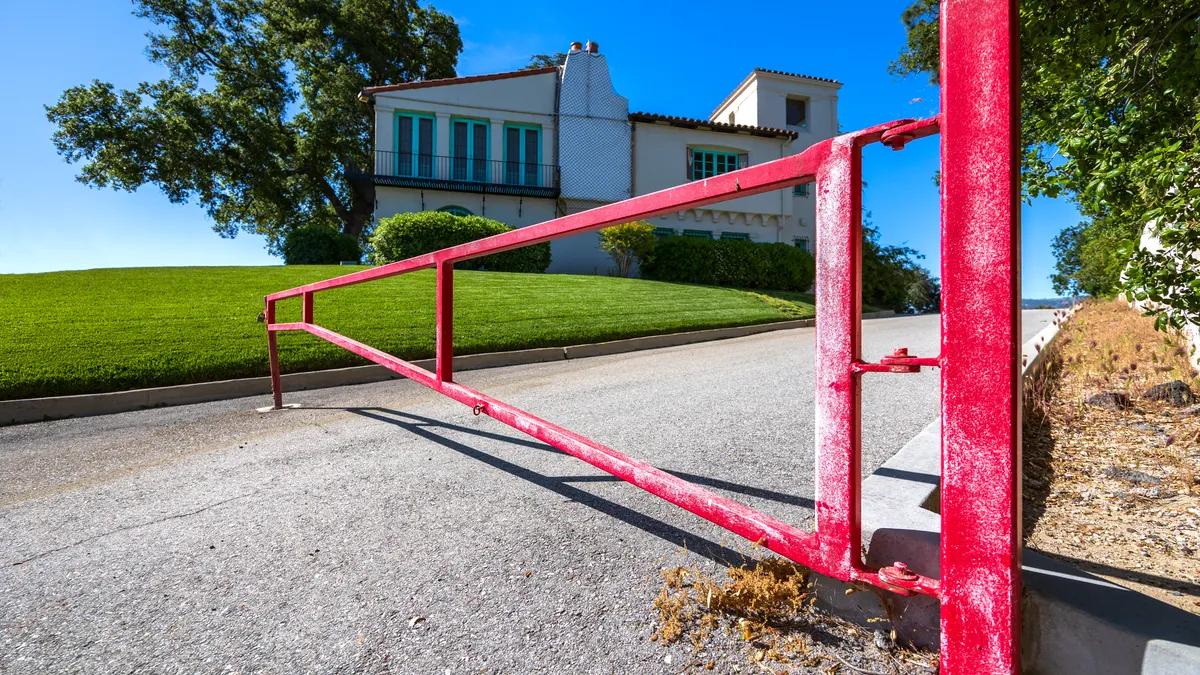
Swing gate wins when the driveway is flat, roomy, and used in a straightforward way. If the opening has enough room for the leaf to move without clipping a lane, and if the ground does not force the gate to scrape or drift out of alignment, a swing gate gives a ranch entrance a cleaner mechanical story: hinges on posts, a latch at the meeting point, and direct motion.
That simplicity matters. A swing gate is often easier to open by hand, easier to understand for guests, and easier to inspect at a glance. If the ranch entrance is not heavily trafficked, the lower hardware complexity can be a real advantage. There is less to go wrong with a pair of properly set posts, good hinges, and a latch that meets squarely.
A swing gate also has a place when the driveway is broad and the property owner wants a traditional look without a long side run for a sliding panel. In calm, flat settings, it can be the most economical layout in practical terms, because it does not ask for the same guide path and travel clearance a slide gate does.
The weakness is also obvious: it needs room. A swing gate becomes a bad fit when the driveway mouth is narrow, when vehicles need to stop too far back, or when the entrance sits near a ditch, hill, tree line, or fence corner that steals arc space. Wind can make matters worse. A tall ranch gate leaf can become awkward in a gust, especially if the panel is solid or nearly solid. The same directness that makes swing gates appealing also makes them unforgiving of poor site geometry.
I would not choose a swing gate for a ranch driveway that sees frequent trailer use, seasonal snowbanks, or a lot of stop-and-go traffic. It is the better answer only when the site already gives it the room it needs.
What the weak points really cost you day to day
Sliding gate’s weak point is not that it “has more parts.” It is that those parts live at ground level and depend on the driveway staying clean enough for consistent travel. A track or guided path can collect dirt, gravel, ice, and plant material. If the opening is on a working ranch where mud follows the tires, the gate’s best feature can become the thing that needs the most attention.
Swing gate’s weak point is not just that it needs space. It is that the space requirement changes how people actually use the entrance. A driver may need to stop short, wait for a clear arc, or swing a leaf far enough that it interferes with turn-in. That small inconvenience becomes a daily tax on access, and ranch gates get opened enough times that small friction matters.
Vehicle clearance is the hidden issue in both styles. A swing gate can make a ranch driveway feel narrower even when the opening is technically wide enough. A sliding gate preserves the lane, but only if the stacking side is clear and the panel does not create a choke point beside the fence. The wrong choice is not the one with the worse brochure; it is the one that makes every trip through the driveway slightly awkward.
Latch options matter, too. A swing gate often uses a more obvious latch point, which is useful when the gate is opened by different people. A sliding gate needs positive closure and a way to keep the gate from drifting. If the latch or stop is poorly chosen, the gate can rattle, misalign, or feel unreliable. Good latch hardware is not a small detail on a ranch driveway; it is what turns a gate into a dependable barrier rather than an annoying obstacle.
For layout guidance that goes deeper than this comparison, the hub on ranch fence gate systems belongs upstream of the purchase decision, not after it.
Which gate handles slope, wind, and vehicle clearance better?
Sliding gate handles those three pressures better on most ranch driveways. Slope, wind, and vehicle clearance are the conditions that most often push a decision away from swing.
A slope can make a swing gate annoying even when the opening looks generous. If the grade causes the leaf to drift, hang unevenly, or sweep across a driveway that is already angled, the gate stops behaving like a simple hinged panel. A slide gate still needs proper alignment, but it is often the easier shape to fit into an awkward site because it does not depend on a clear swing arc.
Wind exposure is where the difference becomes obvious. On an open ranch, the gate often sits where there is little shelter. A swing panel catches wind as it opens and closes, and a large leaf can feel heavy in gusty conditions even when the hardware is sound. Sliding gate is not windproof, but it is generally the safer bet where open country turns every gate into a sail.
Vehicle clearance is the final tie-breaker. If trucks, hay trailers, feed deliveries, or equipment pass through the gate often, the drive should stay as open as possible during use. Sliding gate keeps the movement outside the lane. Swing gate steals part of the lane during operation and asks the driver to respect the gate’s path every time.
That is why the better answer on many ranches is sliding, not because it is inherently superior, but because it tolerates ugly real-world conditions better.
When the decision flips: the exceptions that matter
Swing gate can win when the driveway is wide, flat, low-traffic, and sheltered. In that case, the simpler hardware may be the better long-term fit, especially if the owner wants less moving mechanism at ground level.
Sliding gate can lose when the stacking side has no room. If there is no straight run for the gate to travel beside the fence, the design stops being practical no matter how attractive it seems on paper.
Neither gate should be forced onto a site with chronic drainage problems, a severe grade change, or a roadside layout that leaves no safe clearance for vehicles. At that point, the issue is site design, not gate style.
A manual gate-heavy ranch with minimal daily traffic can also justify swing over sliding if the person opening it values quick visual alignment and simple hinges more than drive-through convenience. That is a narrow case, but it is real.
The verdict: which one to choose and why
Choose sliding gate if your ranch driveway is short on space, exposed to wind, or complicated by slope. Choose swing gate if your driveway is flat, roomy, and low-traffic, with enough arc space that vehicles never need to work around the leaf. Neither if the site has no clear side run for a slider or no safe swing arc for a hinged gate.
That is the clean answer. For most ranch driveways with mixed vehicle traffic, sliding is the better all-around choice because it preserves clearance and fits more difficult terrain. Swing gate is the better choice only when the land gives it room to operate without compromise.
When should you choose a sliding gate?
Choose a sliding gate when the driveway is tight, windy, or sloped enough that a hinged gate would be awkward. It is also the stronger choice when trucks, trailers, or frequent daily entries make vehicle clearance a priority. The trade-off is more hardware and more need to keep the travel path clear.
How much space does a swing gate need?
A swing gate needs enough clear area for its full opening arc, which is the part most ranch driveways underestimate. The exact space depends on the gate width and whether it swings inward or outward, but the practical rule is simple: if that arc overlaps parking, gravel piles, brush, or turning room, the gate is the wrong fit.
Which gate works better on a slope?
A sliding gate usually works better on a slope. A hinged leaf can drag, hang unevenly, or become awkward if the grade interferes with the swing path, while a sliding layout is easier to fit to difficult ground. If the slope is severe or the grade changes near the opening, the site may need redesign before either gate is a good idea.
Drafted with AI; not yet reviewed by a person.