Last updated: October 21, 2026
Heavy-duty ranch gate hardware is the hinge, drop rod, gate brace, post, pin, and bracket system that keeps a large gate moving straight instead of sagging, racking, or dragging. In this Heavy-Duty Ranch Gate Hardware Guide: Hinges, Droppers, and Braces, the hardware matters more than the gate panel itself when the gate is long, heavy, or used every day. For a 16-foot steel frame, the load is large enough that the hinge, brace, and post all have to work together. For related layout help, see the ranch fence gate systems hub.
What ranch gate hardware has to do on a big gate
Heavy-duty ranch gate hardware has one job: hold weight, keep alignment, and take repeated abuse without loosening. A 16-foot steel frame on light strap hinges is likely to sag, rack, or drag if the hardware is undersized.
A ranch gate is not just a swinging panel. It is a hanging load, a closing surface, and often a barrier that gets leaned on, bumped, or latched with gloves on. That is why the hardware package has to work as a system. The hinge carries the vertical load and controls swing. The drop rod or drop pin anchors the free end when the gate is closed. The brace keeps the frame from twisting. The post and bracket transfer all of that force into the fence line.
The common mistake is treating every part as independent; consult a professional or a fence hardware supplier if the gate is large or heavily used, and check sources such as the University of Missouri Extension and Oklahoma State University Extension for gate and fence setup guidance. A 5/8-inch pin in a weak post still fails. A strong brace with undersized hinges still sags. A well-built gate panel with a poor ground anchor still rattles and misaligns. Hardware failure on ranch gates usually begins at one of three wear points: the hinge pin, the gate-side bracket, or the base where the drop rod seats.
For a broader layout of how these parts fit into the whole fence system, the ranch fence gate systems hub should sit beside this guide as the next stop, not as a replacement for it.
The right hardware choice depends on gate width, frame weight, and how often the gate is opened. A 12-foot utility gate and a 20-foot equipment gate do not ask the same thing from a post or hinge. If the gate is built to last, the hardware should be sized as if it will be used hard for years, not as if it will be opened carefully a few times a week.
Which hinge type belongs on a ranch gate?
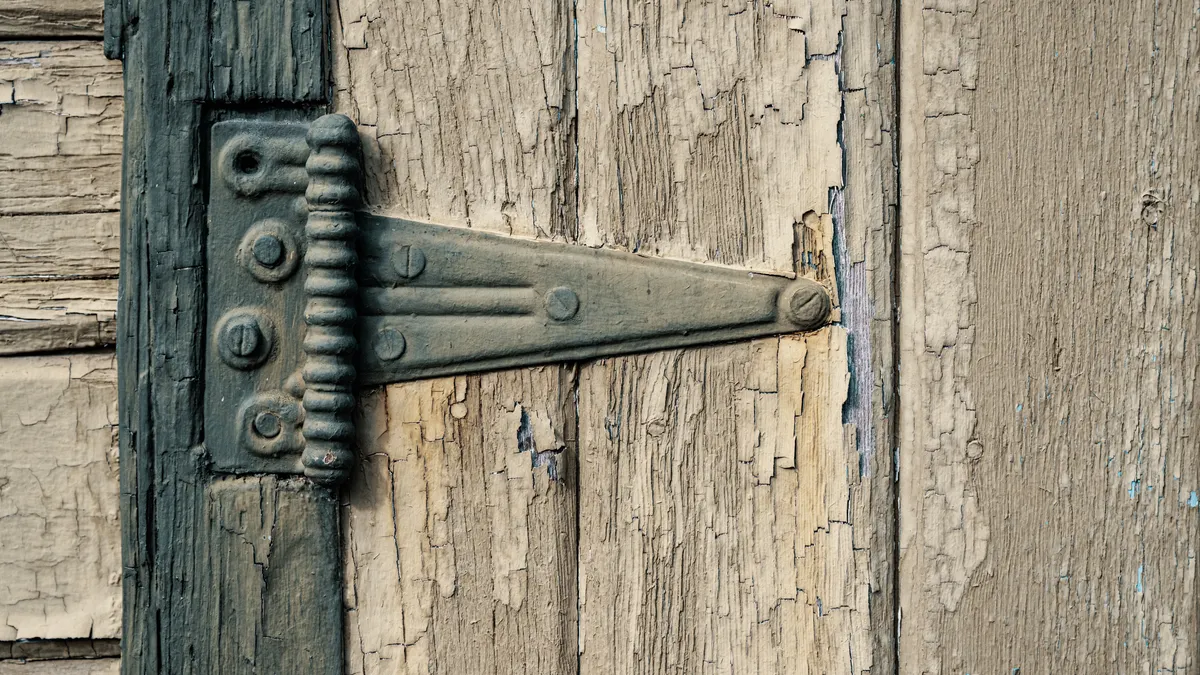
The hinge type for a large ranch gate is usually a heavy strap hinge, a welded hinge with a greaseable pin, or a hinge set built for a shoulder of load rather than decoration. That choice depends on whether the gate hangs from wood, steel, or pipe posts and how much adjustment the setup needs.
Strap hinges spread load across a wider area on the gate frame, which helps on heavier gates and reduces tear-out around one small attachment point. Weld-on hinge assemblies are common on steel gates because they let the hinge become part of the frame. Greaseable pins matter on gates that see constant movement; a dry hinge wears faster and can start to slap or bind.
The pin size matters too. A 1/2-inch pin is not the same thing as a 3/4-inch or 1-inch hinge pin, even if the rest of the hardware looks similar. Bigger pins generally tolerate more load and wear, but only if the post and bracket can support them. A larger hinge on a weak post just shifts the failure to the post side.
A good ranch hinge also gives room for alignment. Minor post movement is normal, especially on long runs or in ground that changes with moisture. Hinges with threaded adjustment or slotted mounting points can make a real difference because they allow the gate to be brought back into square without rebuilding the whole end post.
One limitation is worth saying plainly: a hinge cannot fix a badly framed gate. If the gate itself is out of square, has weak diagonal bracing, or is built from light material over a long span, the hinge will only carry the problem longer before it shows up as sag.
If the gate will carry a lot of daily use, avoid hardware that depends on small fasteners, thin strap metal, or short bearing surfaces. Those parts wear quickly and leave little margin when the gate grows heavier over time with added panels, wire, or repairs.
How do you brace a heavy gate?
A heavy gate is braced by locking the frame into a triangle so the hanging load cannot pull it out of square. The classic fix is a diagonal brace from the lower hinge side to the upper latch side, paired with a strong top and bottom rail.
The brace should resist racking, not just look sturdy. On a rectangular gate, the diagonal takes the compression or tension that keeps the latch side from dropping. If the gate is long, a second brace or a heavier center rail can help keep the frame flat. Steel tubing, pipe, or properly fastened timber all work if the joints are tight and the load path is direct.
A common rule of thumb is that the brace should run in the direction that supports the free end of the gate under load. In practice, that means the diagonal rises from the bottom hinge corner toward the top latch corner on most swing gates. That layout helps keep the latch side from sagging as the gate opens and closes. If the frame is a pipe gate, welded joints are usually better than hardware-only connections because they spread force through the tube instead of concentrating it at a single bolt.
The brace also depends on the post. A stout gate brace with a weak post still moves. That is why the gate post needs to be set and sized for the load, not just tall enough to meet the fence line. The brace transfers force into the post, and the post must transfer it into the ground without leaning.
Step-by-step: set up heavy-duty gate hardware so it stays square

Set heavy-duty ranch gate hardware by hanging the gate first, then bracing and anchoring the free end so the gate closes under its own weight without dragging. This sequence avoids building the hardware around a misaligned frame.
- Set the hinge post plumb and firm before hanging anything. A post that is out of plumb by even a small amount will force the hinges to carry sideways load, which shortens hinge life and makes the gate swing poorly.
- Mount the upper and lower hinges so the hinge pins line up vertically and the gate has even clearance along the top and bottom. A typical large ranch gate needs enough space to swing freely without scraping gravel, frost heave, or a raised threshold.
- Hang the gate and check the latch side before tightening fully. The free end should sit level or slightly high before the hardware settles, because a heavy gate often drops a little after use.
- Install the diagonal brace or verify the factory brace is tight and correctly oriented. The result should be a frame that resists twist when the latch side is lifted by hand.
- Place the drop rod or drop pin in line with the closed position and set its base into solid ground or a prepared receiver. The gate should lock down without forcing the frame sideways.
- Tighten fasteners, then cycle the gate several times and recheck pin wear, bracket movement, and clearance. Small movement on the first day is normal; visible shifting means the load path needs correction.
The details matter here because a gate that starts square but finishes crooked will eat hardware fast. The first wear point is often the hinge pin, followed by the mounting bracket, then the brace joint. A quick recheck after the first few openings can catch that movement before it becomes a repair.
Do not skip the line between hinge work and ground anchoring. Many heavy gates seem fine until the drop rod gets used and the latch end suddenly becomes the weak point. The gate should land on a prepared stop, not on bare soil that collapses or shifts after rain.
What does a drop rod do, and when is it worth using?
A drop rod anchors the free end of the gate so the hinge side does not carry all the load when the gate is shut. On a heavy ranch gate, that matters because the latch side is usually the side most likely to sag and rattle.
A drop rod, sometimes called a drop pin, is not a latch replacement. It is a bottom anchor. When the gate closes, the rod drops into a sleeve, socket, or ground receiver and takes the downward force off the hinges. That reduces swing creep, keeps the gate from bouncing in the wind, and gives the closed gate a firm second point of support.
The hardware is especially useful on wide gates, uneven ground, and gates that are opened often. A 14-foot or 16-foot gate can move enough at the free end to make a simple latch feel sloppy if there is no lower anchor. A drop rod also helps when cattle pressure or equipment vibration keeps nudging the gate open. It gives the gate a physical stop instead of relying on side pressure alone.
The trade-off is maintenance. A drop rod needs a clean seat, a straight drop path, and enough clearance not to jam with mud or gravel. If the bottom end is buried in soft soil, it will wear a hole and start to lean. If the receiver is too shallow, the rod will chatter and bend. A badly aligned drop rod can be worse than none because it encourages the user to force the gate into place each time.
For a ranch gate hardware setup that has to last, a drop rod should be treated as part of the bracing system, not as an afterthought; consult a professional if the gate is wide, heavy, or exposed to constant livestock pressure, and see University of Nebraska–Lincoln Extension or Oklahoma State University Extension guidance on fence and gate hardware. The rod, the gate frame, and the post should line up so the gate closes with gravity, not muscle.
How do you size ranch gate hardware without guessing?
Ranch gate hardware should be sized from the gate’s span, material, and use pattern, not from the fence type alone. A 10-foot light utility gate, a 12-foot steel tube gate, and an 18-foot equipment gate all ask for different hinge strength, post stiffness, and brace support.
Start with the gate itself. Heavier frame material demands larger hinge pins, stronger brackets, and a more rigid post. A long gate also increases leverage, which means the free end multiplies the stress on every hinge. That is why hardware that looks oversized on a short gate can be barely adequate on a longer one.
Next look at the post. The post must be the stiffest vertical element in the system. If the post flexes when the gate moves, the hinge line will drift and the drop rod will stop lining up. On steel setups, a post with a substantial wall thickness and solid anchoring is usually worth more than decorative hardware. On wood setups, the post must resist twist and split, especially where bolts or lag screws pass through.
Then look at the brackets and pins. A bracket with a larger bearing surface spreads force better than one that depends on a small patch of metal. A greasable pin helps on gates that move daily. If the gate is exposed to mud, livestock contact, or equipment traffic, choose hardware that can be cleaned and serviced without taking the gate apart.
A useful way to think about sizing is this: the larger the gate and the harder the use, the more the system should favor wider load-bearing surfaces, thicker pins, and a brace that limits movement before the hinge has to absorb it. That is the part generic articles usually miss. The hinge is only one piece of the load path.
What fails first on ranch gate hardware?
The first failure on ranch gate hardware is usually wear at the hinge pin, bracket holes, or the brace connection, not the gate panel itself. Those parts take repeated motion, dirt, moisture, and side force every time the gate opens.
A sloppy hinge pin lets the gate drop a little at a time. Once that happens, the latch side begins to scrape or miss alignment, and the user starts lifting the gate by hand to close it. That extra lifting accelerates wear. A loose bracket hole does something similar but is harder to spot because the gate may still swing normally until it suddenly pulls crooked under load.
Brace joints fail differently. They do not usually show up as a clean break. More often, the gate starts to rack, the upper rail bows, or the latch end moves out of square by a small amount that grows over time. That is a sign the brace is no longer transferring force as intended.
The fix is not just replacement. The cause has to be removed too. If mud or gravel is grinding at the bottom of a drop rod, clean up the seat. If the post is moving, the hinge hardware will keep loosening. If the gate is being slammed, fit hardware that tolerates impact or add a stop that takes the shock instead of the hinge. If the frame is twisting, strengthen the brace rather than simply installing a larger pin.
One honest limitation: hardware can compensate for a lot, but it cannot rescue a gate that is too heavy for the post and frame that carry it. At that point, the better answer is a rebuild with a stronger layout, not another oversized hinge. For readers who need the larger system view, this guide connects back to the ranch fence gate systems hub.
Key takeaways
- The gate hardware has to work as one load path, not as separate parts.
- On large ranch gates, the hinge carries weight, the brace controls square, and the drop rod stabilizes the closed end.
- Bigger pins help only if the post and bracket are strong enough to support them.
- The most common wear points are hinge pins, mounting holes, and brace joints.
- A hardware setup can improve a good gate, but it cannot fully rescue a badly framed or badly posted one.
What hardware do you need for a ranch gate?
A ranch gate usually needs hinges, a post, a brace, a pin or bolt set, and some kind of ground anchor at the closed end. The exact mix depends on the gate’s width and weight, but the basic job is always the same: carry the load, keep the frame square, and stop the gate from sagging under daily use.
How do you brace a heavy gate?
A heavy gate is braced by using a diagonal member that stops the frame from racking. The diagonal should tie the hinge side to the opposite upper corner so the free end cannot drop. A strong brace still needs a stiff post and tight joints, because the brace only works if the load has somewhere solid to go.
What type of hinge is best for a large gate?
A heavy strap hinge or a welded, greaseable hinge is often the best choice for a large gate. The right one depends on the frame and post material, but the hinge should have a large bearing surface, a pin that suits the load, and enough adjustment to keep the gate square.
Drafted with AI; not yet reviewed by a person.