Last updated: September 10, 2026
Key Takeaways
- For fence types materials ranch use — complete guide decisions, the biggest mistakes are choosing the wrong fence for the animal, underbuilding corners, ignoring visibility, and assuming the cheapest material will stay cheapest for 10 years.
- I am focusing on working fence, and if your ranch has unusual hazards or local code issues, consult a qualified fencing professional or extension office before buying materials.
- A cheap fence that fails every spring is expensive.
- A pricier fence that stays serviceable with routine tightening and patching may be the better buy.
- In USDA and extension guidance, the right fence is usually the one that matches stock pressure and maintenance capacity, not the one with the lowest sticker price.
What this guide covers — and what it assumes you already know
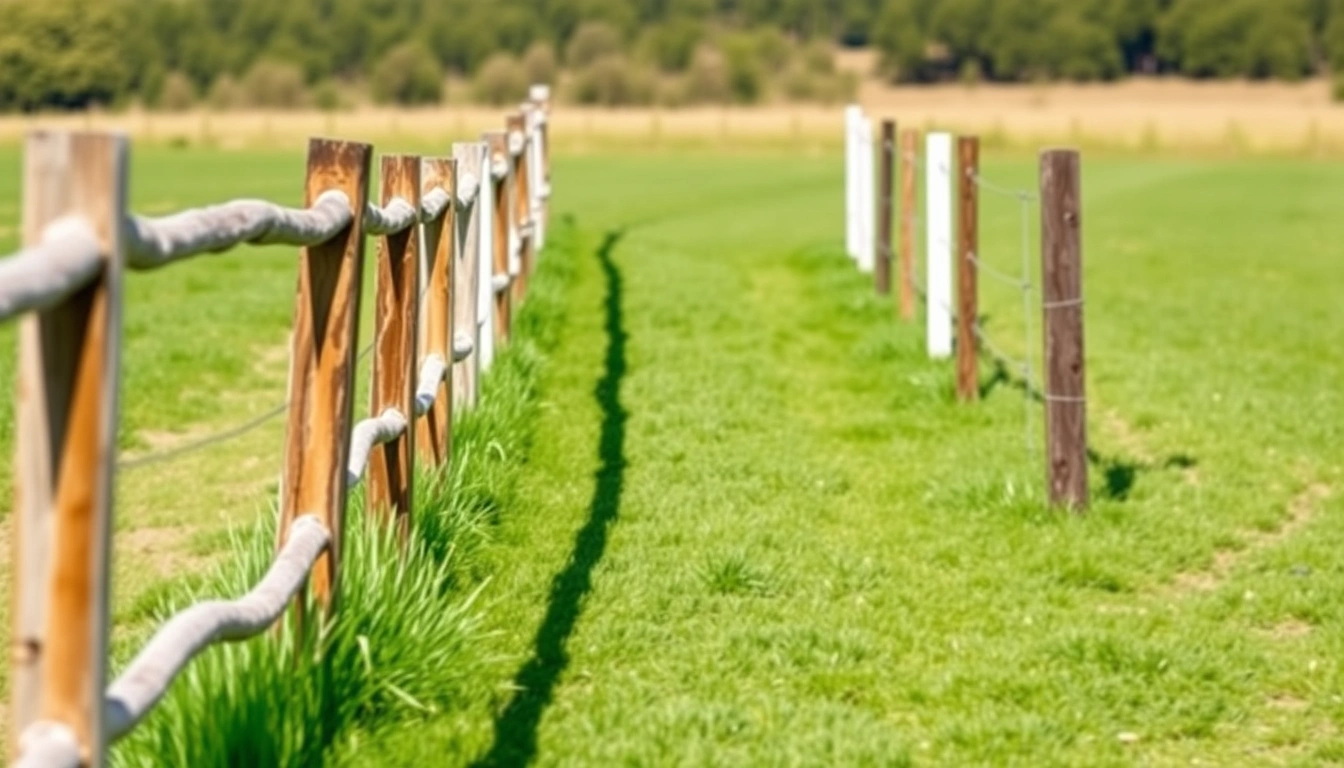
This fence types materials ranch use — complete guide is for ranch owners, managers, and land stewards who need a fence that will actually hold cattle, horses, sheep, or mixed stock under real ranch conditions, not just look straight on a sunny day. You probably already know the basics: property lines, livestock type, rough acreage, and whether the main job is containment, rotation, exclusion, or all three. And yes, fencing is a system, not a single product. Post spacing, brace work, wire choice, wire tension, gates, terrain, snow load, and vehicle access all matter.
Need a fence that keeps dangerous bulls in, stops horses from tangling, blocks sheep from squeezing through, or survives wildfire-prone, flood-prone, or high-wind country? Then the materials choice changes fast. In those cases, a different fence for each paddock is often the answer; one uniform setup across the whole ranch usually sounds neater than it works. I am not covering decorative fencing, suburban privacy fencing, or short-term pet fencing here; for those, consult a licensed installer or your local extension office because the design rules differ. Working fence is the focus.
The question most readers really need answered is plain: which fence type and material fit the animal, the terrain, the budget, and the maintenance you can realistically keep up for the next 10 to 20 years? That is the standard I am using here. A cheap fence that fails every spring is expensive. A pricier fence that stays serviceable with routine tightening and patching may be the better buy. On many ranches, a $1.50-per-foot difference at installation can be smaller than one season of repeated repairs. Penny wise, pound foolish.
Which ranch fence should you choose first?
Start with the animal’s behavior, then the land, then your labor budget. That order matters. Cattle press and lean, horses spook and rub, sheep slip through gaps, goats climb, and wildlife pushes, jumps, or crawls where a fence looks weakest. A fence that is “strong” in one sense can still fail if its geometry is wrong for the stock.
Barbed wire, high-tensile smooth wire, and woven wire are the usual workhorses for cattle. Barbed wire is the classic low-cost perimeter pick for large acreages, especially where the main goal is to define a boundary and keep calm cattle in. High-tensile smooth wire, often with electric offset, is common where long runs need fewer repairs and cleaner lines. Woven wire, sometimes called field fence or fixed-knot woven fence depending on construction, costs more but gives a tighter physical barrier. In USDA-style fencing budgets, the difference between a simple cattle line and a woven perimeter can be several dollars per foot before labor.
For horses, I would not make barbed wire my default. Horses are more likely to injure themselves on it. Board fence, rail fence, welded-wire horse fence with a smooth top rail, or high-visibility electric options are usually better. Sheep and goats are different; woven wire is the baseline because the animal is more about gaps than force. Goats need height, tight spacing, and in many cases electric reinforcement because they test everything.
Terrain changes the answer. On flat, open land with long runs, high-tensile wire can be efficient because it uses fewer posts and handles large spans well. On broken ground, creek bottoms, and wash country, a more forgiving fence with more posts may stay aligned better because it does not rely on tension alone. In heavy snow or ice, smooth-wire systems can shed loads better than rigid panel systems, but only if bracing is done correctly. Otherwise, the whole thing goes sideways.
Two standards matter a lot here: the American Society of Agricultural and Biological Engineers’ guidance on electric fencing design is useful for pulse energy and grounding concepts, and ASTM standards are often referenced for wire and coating performance. If you are buying components, the spec sheet should tell you wire gauge, zinc coating class, post material, and recommended spacing. If it does not, assume you are buying on marketing, not specification. For reference, ASABE and ASTM both publish material and design guidance used across agricultural fencing supply chains.
My position is straightforward: for most ranches, a mixed system beats a single fence type. Use a strong perimeter fence, then lighter internal fencing for rotational grazing. That approach is wrong for someone who wants one fence to do every job on every acre, because no fence is best at everything. One-size-fits-all is a trap.
What are the main ranch fence types, and where does each one fit?

Barbed wire, high-tensile smooth wire, woven wire, electric fence, board or rail fence, pipe fence, and livestock panels are the main fence types, and each has a pretty narrow sweet spot. Force the wrong type into the wrong job, and you pay for it in repairs, escapes, or animal injury.
Barbed wire sticks around because it is relatively inexpensive per linear foot and covers distance well. It is best for cattle perimeter fencing on large properties where pressure is moderate and visibility is not the main issue. It is a poor fit for horses, and I would avoid it anywhere calves, foals, or wildlife routinely contact the fence. Its barbs do the holding, but they also do the cutting. In many farm-supply quotes, barbed wire remains one of the lowest-cost perimeter options per mile.
High-tensile smooth wire relies on tension and strength rather than barbs to hold stock, often with an electric charge added in. It works well for cattle and, in some setups, for deer exclusion or pasture subdivision. The material can be efficient over long runs because it uses fewer posts than woven systems. The trade-off is plain: it depends on proper tension, strong bracing, and reliable grounding if electric is part of the design. A weak brace or poor insulators can turn the whole line into a maintenance job. For electric systems, grounding is not optional; a multi-rod ground system is often the difference between a useful fence and a weak one. That math stops working fast.
Woven wire gives a physical barrier with smaller openings. It is the most straightforward choice for sheep, goats, and mixed stock where smaller animals matter. It also works for calves and predator pressure when installed with the correct height and bottom gap. The downside is cost and labor. It takes more hardware, more time, and more care on uneven ground. If you use woven wire, watch bottom-edge contact on rocks and low spots; sag there and small stock find the weakness first. In many ranch builds, woven wire is chosen when a 4-inch or tighter opening is needed near the ground.
Electric fence is a management tool, not a material by itself. It can be permanent, semi-permanent, or temporary. Electric fencing works because the animal learns to respect the pulse. That means visibility matters. A single strand of thin wire in tall grass is a bad joke. Electric fence is ideal for rotational grazing, training pressure, and temporary exclusion, but it needs good grounding, vegetation control, and regular voltage checks. A fence that is “hot” only at the energizer is not a fence. Extension publications commonly recommend checking voltage in the field, not only at the charger.
Board or rail fence is the visual and physical option many horse owners prefer. It is highly visible, which matters for horses, but it is expensive and can require more upkeep than wire. Wood moves, checks, rots, and splits. If you choose wood, select rot-resistant species where available, use proper post setting depth, and accept periodic replacement of rails or boards. It is a premium choice where appearance and horse safety matter more than long linear economy.
Pipe fence is common where impact resistance matters and labor is available for a heavier build. Steel pipe resists hard pushing and gives a very durable perimeter in dry country. The trade-off is cost, welding or fabrication, and corrosion protection. Pipe fence is not light, and it is not cheap to modify later. For livestock yards, a pipe system can cost several times more than a wire line, but it often takes harder abuse.
Livestock panels are useful for corrals, handling alleys, small pens, calving areas, and short runs. They are not my first choice for long ranch perimeters because the cost per foot and the number of connections add up fast. Panels excel where portability or confinement matters more than long-distance economy.
A generic article often forgets the real-world ranking: the best ranch fence is usually not the strongest-looking one. It is the one that fits the animal and the maintenance schedule. A 10-mile fence that needs a crew every week is worse than a simpler 2-mile fence that stays sound. On a working ranch, fewer repairs usually matter more than a louder fence spec.
Fence materials: what actually lasts on a working ranch?
The best fence material is the one that survives your soil, weather, and stock pressure without turning routine maintenance into a constant rebuild. So pick the post material, wire type, coating, and fastener first; the headline feature matters less than people think. In fence types materials ranch use planning, durability is measured in seasons and repair trips, not in brochure copy.
Wood posts are common because they are easy to source and familiar to install. Treated posts can last well when properly set, but their life depends on treatment quality, soil drainage, and installation depth. In many treated-post manuals, service life can vary widely because wet ground, poor backfill, and shallow setting shorten it fast. Wood is a good fit where you want a traditional look or where local supply is strong. It is weaker where rot, insects, or fire risk are major concerns, and if those risks are high you should consult a local fencing professional before committing.
Steel T-posts and Y-posts are useful for line support on many wire fences. They install faster than large wood posts and cost less per piece in many markets. The limitation is strength under hard lateral load and the need for proper brace assemblies at corners and gates. A T-post is a line post, not a substitute for a real corner. In a typical ranch build, T-posts are best where the line load is light and the brace does the real work.
Fiberglass or composite posts are often used in electric fence systems because they are nonconductive and lighter to move. They make sense in temporary or semi-permanent setups. I would not rely on them as the sole answer for a high-pressure perimeter unless the system is designed around that material and the animal pressure is light.
Steel wire comes in several forms. Barbed wire usually uses high-tensile steel. Smooth wire for high-tensile systems depends on tensile strength and coating. Gauge matters, because a thinner wire can be easier to stretch and cheaper, but it may not tolerate the same abuse. Coating matters too. Galvanized wire resists corrosion better than plain steel, and coating class affects durability in wet or coastal environments. If the spec sheet is vague, move on. Buying by coating class and wire diameter is safer than buying by color or brand name alone.
PVC coating on wire and rail fence can improve visibility and reduce surface corrosion in some contexts, but coatings can also trap moisture or get cut by hardware. They help most where visibility is the point, not where raw abrasion is the main problem.
Concrete is not a fence material in the usual sense, but it matters for post setting. A properly set post in compacted soil or concrete footing can make or break a corner assembly. In very wet or freeze-thaw ground, the footing method matters as much as the post itself. A deep-set terminal post with a good footing often outlasts a shallow one by years.
For ranch use, I usually divide material decisions into three questions: does the material resist the local environment, does it match the animal, and can you repair it with the tools you actually have? If the answer to the last question is no, the fence may be too clever for the ranch that has to live with it. A material that needs specialized labor every time it breaks can be expensive even if the sticker price looks good.
A common omission in generic guides is corrosion and grounding. In electric systems, galvanized steel and correct ground rods are not accessories; they are part of the fence’s function. In dry country, you may need multiple ground rods because poor grounding can cripple performance. The National Electrical Code does not govern normal ranch fencing the way household wiring does, but grounding principles still matter, and local code can affect energizer installation. The USDA and extension services also stress grounding checks after dry spells because performance can drop fast.
How do you choose the right fence system for your ranch?
Pick the right system by matching animal pressure, terrain, and maintenance reality, then build the fence from the corners outward. That order matters because every fence fails first at the places people skimp: corners, braces, gates, and transitions. On many ranches, this choice is made once every 10 to 20 years, so the layout has to work in real weather and real labor conditions.
- Define the job for each line. Mark perimeter, cross-fence, laneway, corral, and exclusion zones separately, then assign a fence type to each. Verify that every segment has a clear purpose. A problem is treating the whole ranch as one fence category.
- Identify the stock class and pressure. Decide whether the line holds cattle, cows with calves, bulls, horses, sheep, goats, or mixed species. Use the more difficult animal in the group as the design driver. Verify likely pressure points such as water access, shade, mineral sites, and gates. A problem is designing for calm cattle when you actually run cattle plus goats.
- Choose the fence type by failure mode. Pick barbed wire or high-tensile for long cattle runs, woven wire for sheep and goats, board or pipe for horses, and electric for training or subdivision. Verify the fence has the right height, number of strands, or mesh spacing for the smallest or most difficult animal. A problem is selecting by cost alone and ignoring how the animal escapes.
- Lay out the corner and brace structure first. Install corner posts deep enough for the soil, usually with brace assemblies that resist pull, not just vertical load. Set gate posts and terminal posts before line posts. Verify corners are square and brace wires or brace rails are tight. A problem is starting with line posts and hoping the corners sort themselves out.
- Set post spacing to the material. For wire fences, line posts commonly fall around 8 to 12 feet apart in many ranch builds, tighter where terrain is rough or stock pressure is high. For woven wire, keep spacing conservative so the fabric does not sag. Verify plumb posts and consistent spacing. A problem is stretching wire across too few or too many supports.
- Install the wire or fabric with correct tension. Tension smooth wire enough to stay straight without overloading braces; woven wire should be taut but not drum-tight. Use proper clips, staples, or fasteners that let the material move slightly where needed. Verify that the fence remains aligned after tensioning. A problem is over-tightening, which can warp posts and snap in temperature swings.
- Add gates, crossings, and offsets. Use gate widths that fit your largest equipment, not just a pickup. Build wildlife or water crossings with reinforcement where needed. If using electric offsets, keep the offset distance consistent enough to prevent livestock contact with the main line. Verify latches close cleanly and gates do not drag. A problem is treating gates as an afterthought.
- Finish with visibility and maintenance details. Use top rails, flagging, offset wire, insulators, or contrasting tape where visibility helps. Mark fence lines on a maintenance map and plan a voltage or walk-through check at least once each season, and after storms. Verify that tools, replacement wire, and spare insulators are on hand. A problem is building a fence you cannot maintain after the first repair.
The exact measurements depend on your terrain and stock, but the logic does not change. Start with the load points, then the line. That is the difference between a fence and a future repair bill.
What are the mistakes people actually make with ranch fencing?
The biggest mistakes are choosing the wrong fence for the animal, underbuilding corners, ignoring visibility, and assuming the cheapest material will stay cheapest for 10 years. Each one has a predictable cost, and the cost is usually escape, injury, or endless repair.
1. Using barbed wire where horses work close to the fence. The consequence is injury risk, especially if a horse spooks, leans, or runs into it. The better alternative is board, rail, well-designed electric, or horse-specific woven fence with safe top treatment.
2. Treating corners like ordinary posts. The consequence is sagging wires, rotated posts, and a fence that slowly loses alignment. The correct alternative is a real brace assembly sized for the load, with terminal posts and brace wire or brace rails that actually transfer force.
3. Stretching woven wire or smooth wire without thinking about temperature and terrain. The consequence is either slack lines in hot weather or snapped fittings in cold weather. The correct alternative is to tension within the material’s working range and leave room for seasonal movement, especially on long runs.
4. Running electric fence through heavy weeds and expecting animal respect. The consequence is low voltage at the point of contact and animals learning the fence is negotiable. The correct alternative is vegetation control, proper grounding, and voltage checks with a fence tester. A hot energizer at the barn is not proof the far corner is hot.
5. Choosing post spacing by habit instead of the wire type. The consequence is sag, fabric distortion, and earlier failure at mid-span. The correct alternative is to match spacing to the material and the pressure. A woven fence needs different support than a simple three-strand cattle run.
6. Building for the fence you want instead of the fence you will maintain. The consequence is neglect, because the line gets harder to fix every year. The correct alternative is to choose materials