Last updated: September 10, 2026
Key Takeaways
- A DIY plan that skips those details is underbuilt.
- That is why some owners are tempted to DIY.
- Got a few hundred feet and the equipment already? DIY can make sense.
- And a DIY job that saves labor but ignores those same details can fail for the same reasons.
Comparing DIY ranch fence vs hiring a contractor: which is right for your property? The blunt answer is this: on a 200-foot to 300-foot simple run over flat ground, DIY can save cash. For longer lines, livestock containment, or tricky terrain, hiring a contractor is usually the safer bet. I’d hire a contractor for most properties and only go DIY for short, simple stretches on flat land. Pride has nothing to do with it. Posts, soil, layout, and the price of a mistake do — especially when a gate drags, a corner leans, or a line sags after the first hard rain.
I write about property improvements and local service work with one thing in mind: homeowners usually spot the hard part too late. Fence work looks easy until the corner bracing, hole depth, and site conditions start charging rent. For DIY ranch fence vs hiring a contractor: which is right for your property?, that is the real tradeoff.
The real question: saving money or buying certainty?
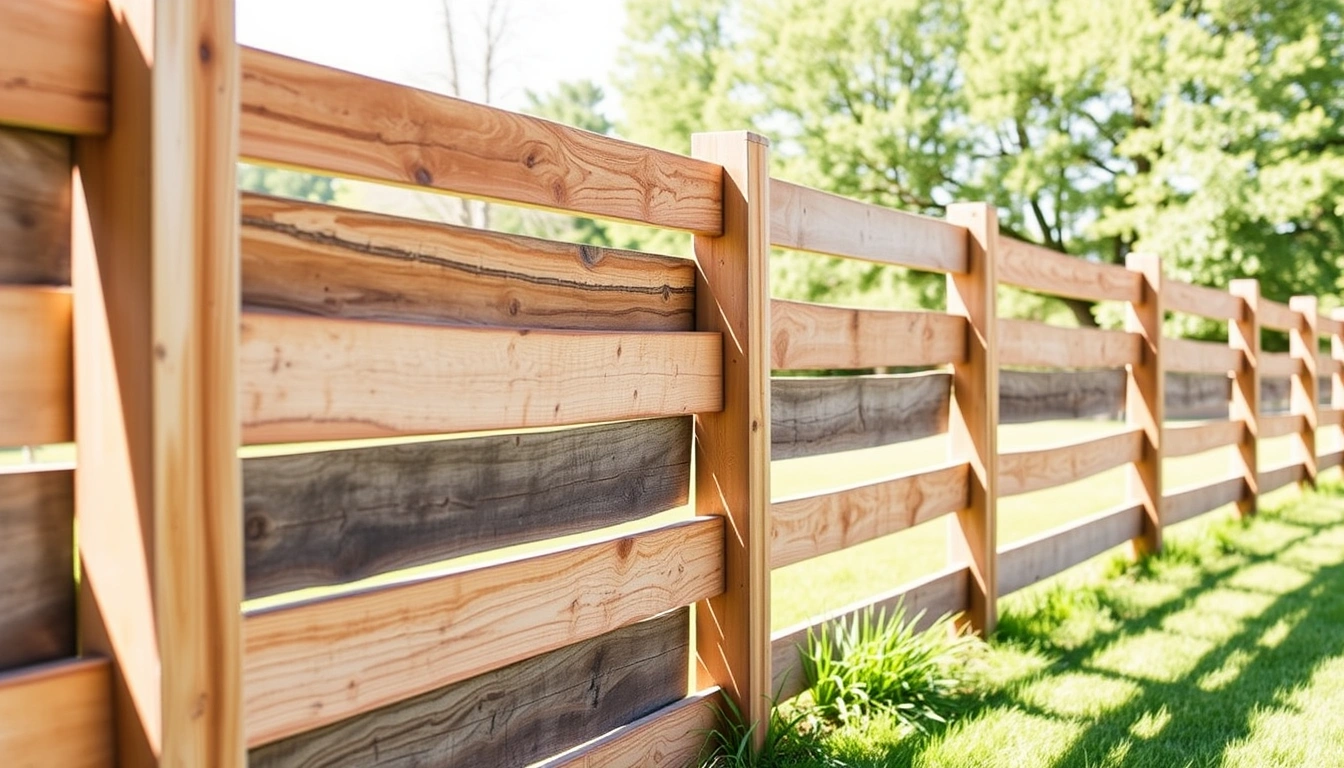
However, DIY ranch fence wins on labor cost, while a contractor wins on finished quality and risk control. That’s the trade. Plain and simple.
A ranch fence is not a decorative backyard panel. Usually, the job means treated wood posts or steel posts, horizontal rails or wire, corners that must hold tension, and gate openings that need to stay square. Long line? Rolling ground? Animals to contain? The margin for error shrinks fast. One sloppy layout on day one can turn into a bowed line, loose braces, and post resets later. If you are unsure about post depth or brace design, consult a local fencing professional or county extension office before you start.
DIY fits best when the property owner already has the tools, the time, and enough fence-building skill to set corners, string a line, and keep posts consistent over a long run. The upside is real: no labor markup, no scheduling bottleneck, no waiting on a crew window.
By contrast, hiring a contractor makes sense when the property needs more than basic carpentry. Rocky ground, wet soil, steep grades, several gates, irregular property lines, or any fence that will face pressure from cattle, horses, or repeated gate use all point that way. The contractor is not just selling labor. You are paying for layout, sequencing, material handling, and the ability to catch a problem before it becomes a row of mistakes.
The big thing a generic article leaves out is simple: a ranch fence is only as good as the corners and brace assemblies. If a fence company does not talk clearly about end posts, brace posts, post spacing, and gate structure, that is a warning sign. And if a DIY plan does not account for those same details, it is underbuilt.
Who should build it themselves?
Meanwhile, DIY wins only for the reader who already has the right kind of property and the right kind of patience. I’d put that person in a narrow group: a landowner with a relatively straight run, moderate soil, a simple layout, and enough free time to spend multiple weekends doing slow, careful work.
That group is larger than many people think, but it is still limited. A straight perimeter on open, accessible land is one thing. A fence that has to snake around trees, drainages, old stumps, utility easements, and uneven corners is another. Once the terrain forces improvisation, crooked lines and weak braces creep in. Ugly stuff. Quietly, too.
DIY also fits a person who already owns — or can borrow — the gear that matters: post-hole auger, tamper, level, measuring tape, string line, digging bars, and a way to haul materials. Even then, time is the hidden cost. A single-person fence project can stretch over several weekends depending on length, soil, and weather. Rain delays matter because wet ground changes how posts set and how the trench or holes behave.
The weakness is not just labor. It is liability. If the fence is for horses, cattle, or any animal that can push, lean, or break through, a weak corner can become a real problem. A DIY builder can install a fence that looks fine from the road and still fail under load because the brace assembly or post depth was not right.
DIY is the wrong answer if the property line is unclear, the soil is hard clay or rock, the fence must match an existing system, or the owner wants the job done once without learning on the fly. It is also a poor choice if the landowner needs permits, utility marking, or setback compliance and does not want to manage those details personally.
Why hiring a contractor usually wins for ranch fencing
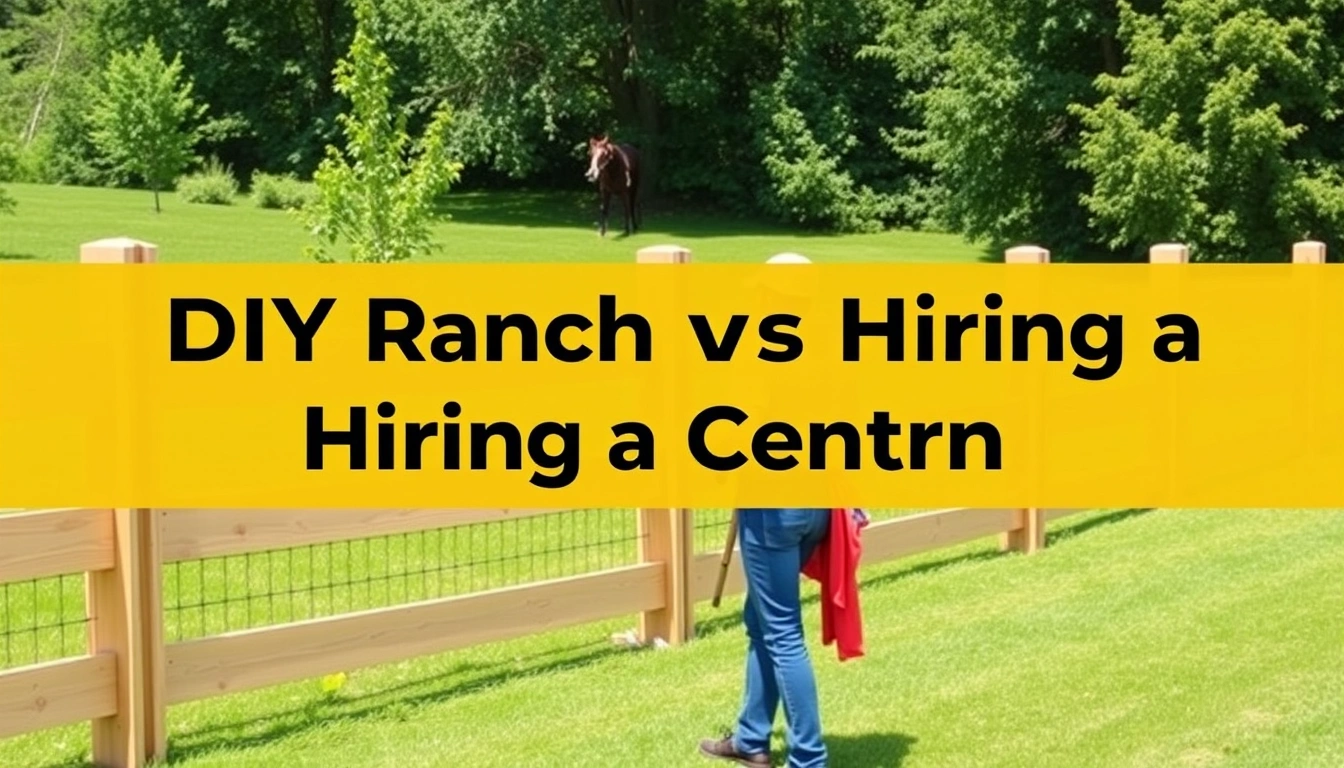
Overall, hiring a contractor wins when the fence has to work the first time and keep working through weather, animal pressure, and normal wear. That is the practical standard, and it is why most large or serious ranch jobs belong to a pro.
A contractor brings pace and sequencing. A good crew does not just dig holes faster. It stages materials, sets corners, checks alignment, handles gates, and keeps the line consistent across a longer run. That matters because ranch fencing has a compounding problem: a small error early in the job becomes expensive to fix after several hundred feet of line are already in place.
It also matters because the tricky parts are not obvious to people who have only built light-duty fencing. Corner and end assemblies need to resist tension. Gates need enough structure around them to avoid sagging. Post spacing changes by fence type, purpose, and terrain. None of that is exotic work, but it is the part that separates a fence that looks finished from one that behaves like a fence.
The downside is price. You will pay for labor, mobilization, equipment, and the contractor’s overhead. If the property is remote, if access is poor, or if the job is small, the total can feel out of proportion. That is why some owners are tempted to DIY. The temptation makes sense, but a cheap fence that fails after a season is not cheap.
What to ask a contractor is more useful than asking for a generic bid. Ask how they handle corners and braces, what post type they recommend for your soil, how deep they set posts, whether they include gate hardware, whether they locate utilities, and what they do if they hit rock or soft ground. Ask who pulls permits if the county requires them. If a contractor answers those questions quickly and specifically, that is a good sign. If the answer is vague, the price is not the main issue; the process is.
A contractor is not the right answer if the job is tiny, the site is simple, and the owner already has the skills and tools. Paying for a full crew to build a short straight fence can waste money.
Side-by-side: what actually changes your decision
Consequently, the honest comparison is not “cost vs quality.” It is cost, risk, time, and site complexity.
| Criteria | DIY Ranch Fence | Hiring a Contractor | Winner for [condition] |
|---|---|---|---|
| Up-front cash outlay | Lower because labor is unpaid by you | Higher because labor and overhead are included | DIY for a tight budget and simple layout |
| Time to completion | Usually slower; can take multiple weekends | Usually faster because a crew works in sequence | Contractor for a deadline or livestock move-in |
| Corner and brace quality | Depends entirely on your skill and tools | More consistent if the crew is experienced | Contractor for load-bearing fence lines |
| Terrain handling | Hard on slopes, rock, wet soil, and trees | Better at adapting to obstacles | Contractor for uneven or difficult ground |
| Gate alignment | Easy to get wrong without careful layout | More likely to stay square and usable | Contractor for multiple gates or heavy use |
| Permit/utility coordination | You manage it | Often handled or at least flagged early | Contractor where local rules are involved |
| Repair risk after installation | Higher if posts were set shallow or off-line | Lower if the work is done correctly | Contractor for long-term reliability |
| Control over materials | Full control if you source everything | Depends on the contract and spec sheet | DIY for owners who want to choose every component |
| Learning value | High; you gain the skill | Low; you are buying the result | DIY if this is a one-time skill project |
The row that changes most choices is not price. It is how much failure you can tolerate. A ranch fence that gives way after a hard wind or a season of animals costs more than the quote you dodged.
A generic article often misses another point: small jobs can be inefficient for contractors, but small jobs can also be awkward for DIY if the owner has to buy tools. Need 200 feet to 300 feet and already have the equipment? DIY can be sensible. Need only a short stretch and own nothing but a shovel? Hiring may actually be the cleaner use of money.
For a practical price check, ask local contractors for a written estimate by linear foot, then compare it against the cost of posts, rails or wire, concrete or gravel, gates, fasteners, and tool rental. Not glamorous. Still the comparison that matters.
What a bad ranch fence job looks like
A bad job is not just an ugly fence. It is a fence with symptoms that predict failure.
First warning sign: a line that wanders. If the fence is visibly bowing between posts or changing direction without a deliberate corner, the layout was sloppy or the posts were set inconsistently. Next: a gate that sticks, drops, or needs lifting by hand. That usually means the opening was not squared, the hinge side was not braced properly, or the gate post moved.
Another sign is shallow or uneven post setting. In ranch work, posts that are not consistently anchored tend to shift under load, especially after wet seasons or freeze-thaw cycles in colder climates. Soft soil makes this worse. So does poor drainage. In some areas, frost depth, clay expansion, or high winds change the whole design conversation. A fence that would be fine in dry, level country can fail in a place with freezing ground or saturated subsoil.
For livestock owners, the bad-job test is simple: does the fence stay tight, square, and closed when animals test it? If not, the fence is functionally wrong even if it looks fine on installation day.
This is why the cheapest quote is not always the best choice. A contractor who quotes low but skips bracing detail, uses undersized posts, or avoids site complexity can create a problem that shows up later. And a DIY job that saves labor but ignores those same details can fail for the same reasons.
For authoritative guidance on fence layout and property-line caution, I’d also point readers to their county extension office and local building department, since setback and permit rules vary by area. For post-setting and structural considerations, the American Wood Council and the National Association of Home Builders both publish useful technical guidance on exterior wood construction and site conditions.
Which factors should decide your call?
Therefore, choose DIY if the fence is short, the land is level, the soil is friendly, the layout is simple, and you already have the tools and time. Choose a contractor if the line is long, the ground is difficult, the fence must hold animals, or you need the job done without learning by mistake.
Here is the clearest rule I can give: if you are asking, “Can I do this?” the answer may be yes. If you are asking, “Can I afford for this to go wrong?” the answer usually points to a contractor.
That is especially true for ranch fencing that protects animals or defines a working boundary. The cost of repair, rework, and lost containment can dwarf the original savings from DIY. On the other hand, if the project is a straightforward perimeter on accessible land and you are comfortable working carefully over several days, DIY can be the smart call.
I would not choose DIY just because the quote feels high. I’d only choose it when the structure is simple enough that mistakes are unlikely and the owner is prepared to work methodically. I would not choose a contractor just for convenience if the job is small and simple enough to handle without special risk.
What changes the answer in the real world?
Next, the answer flips when the job stops being ordinary.
If the property has steep grades, drainage swales, large rocks, or tree roots, I would move toward a contractor. Those obstacles burn time and force field adjustments that take judgment, not just labor.
If the fence is for horses, cattle, or mixed livestock, I would also lean toward hiring. A containment fence has to do more than mark a border. It has to stay functional under pressure, and that makes brace work and post setting more important than the material photo in the estimate.
If local rules require permits, inspections, or utility marking, a contractor can reduce friction. That is not a guarantee of compliance, but it does lower the number of moving parts you have to manage.
If the owner already owns a tractor, auger, and fencing tools, and the line is simple, DIY gets more attractive. At that point the financial gap widens because you are not renting as much equipment and you are not paying someone else to do slow, repetitive work on a clean site.
The one situation I would call a hard no for DIY is a fence that must perform immediately and has no room for error. If failure means escaped animals, damaged crops, or conflict with neighbors, pay for the contractor.
FAQs
How do I know if my ranch fence project is too big for DIY?
If the run is long, the ground is uneven, or the fence needs multiple gates and strong corner bracing, it is probably too big for a first-time DIY job. A few hundred feet on simple ground is manageable for many owners; a complex perimeter usually is not.
What should I ask for in a contractor estimate?
Ask for material type, post spacing, corner and brace details, gate hardware, drainage or site-prep assumptions, and whether utility marking or permits are included. A proper bid should read like a scope of work, not a one-line number.
What makes a ranch fence fail early?
Shallow posts, weak corners, bad gate framing, poor drainage, and rushed layout are the usual causes. The line can look fine on day one and still fail under wind, frost, or animal pressure.
Is DIY always cheaper?
No. DIY is usually cheaper in cash, but not always cheaper in total cost. Tool rental, material waste, rework, and extra weekends can erase part of the savings.
Should I get multiple contractor bids?
Yes. Two or three written bids make it easier to spot missing items, weak specifications, or unusually low pricing that may signal cut corners.