Last updated: September 10, 2026
Key Takeaways
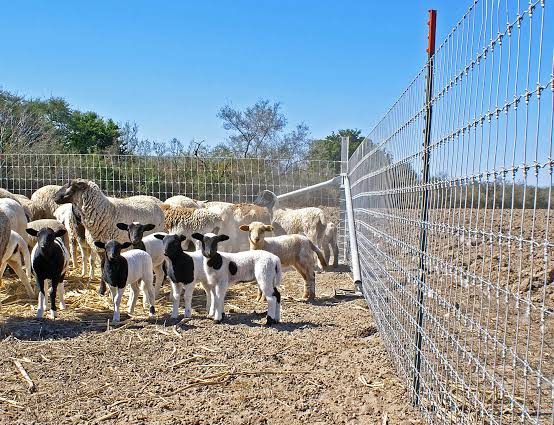
- Let the fence open too much in the bottom 12 to 18 inches, and lambs will find their way through.
- A tighter mesh, or lower wire spacing, is the better call — especially around that bottom 18-inch zone.
- Use 48 to 54 inches for cattle, 54 to 60 inches for horses, 48 to 52 inches for goats, and 42 to 48 inches for sheep.
- When the line sags so the middle sits 3 or 4 inches below the posts, the usable height is already lower.
Need the short answer? Here it is. Cattle usually need a fence about 48 to 54 inches tall, horses usually need 54 to 60 inches, goats often need 48 to 52 inches plus tight spacing, and sheep usually do best with 42 to 48 inches and smaller openings. The topic here is fence height spacing cattle, horses, goats, sheep, and the real answer depends just as much on spacing between wires or rails as it does on height, because a fence can be tall and still fail if an animal can push through, crawl under, or get a head stuck. Tall is not magic.
Who this is for, and what I’m assuming you already know
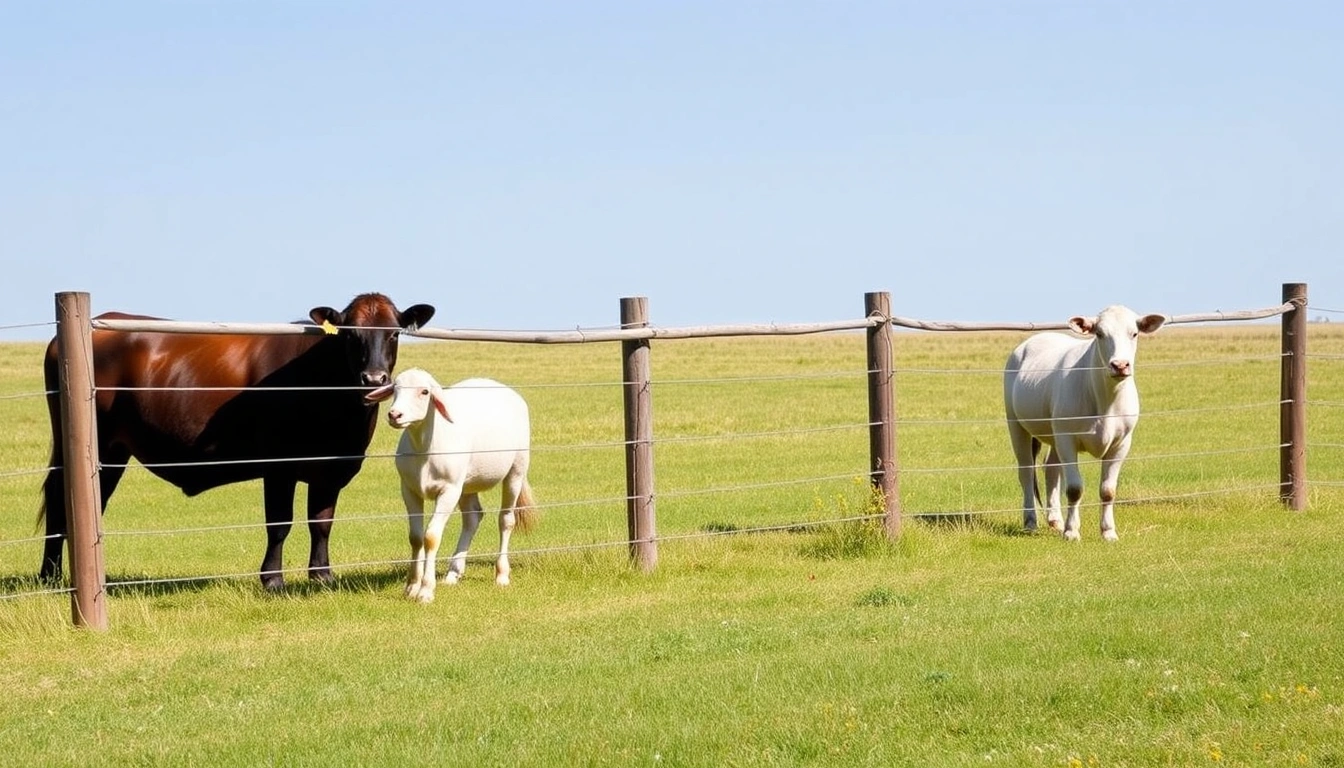
This is for anyone choosing or rebuilding perimeter fencing for cattle, horses, goats, or sheep on a farm, hobby property, or small acreage. I’m assuming you already know your fence has to do more than “look sturdy”: it has to hold animals in, keep some animals out, and survive pressure, rubbing, leaning, and weather for years.
I’m also assuming you can tell the difference between a post, a rail, a wire line, and a gate, and that you already know the basic fence types in play: woven wire, high-tensile smooth wire, board fence, pipe fence, electric fence, and combinations of them. If those terms are still fuzzy, fair enough — the labels matter because the right height depends on the fence style as much as on the species.
My practical position is simple: one fence height does not fit all livestock. A 48-inch fence can be fine for quiet cattle on a well-managed pasture, and a bad idea for a jump-prone horse or a climbing goat. A 60-inch fence can still be wrong if the lower openings are large enough for kids or lambs to slip through. If you are fencing mixed species, I would plan for the animal with the most difficult escape tendency, not the most cooperative one.
A generic “4-foot fence for everything” article gets this wrong. Horses often need a different layout than cattle because visibility and breakaway behavior matter. Goats need tighter spacing than height alone suggests because they climb and thread through openings. Sheep are less likely to jump than horses, but lambs will test the bottom gaps you thought were harmless. The fence has to match the animal’s body shape and behavior, not just its average size. That’s the whole trick.
How tall should the fence be for each animal?
For fence height spacing cattle, horses, goats, sheep, the right height is usually 48 to 54 inches for cattle, 54 to 60 inches for horses, 48 to 52 inches for goats, and 42 to 48 inches for sheep, with spacing chosen to match the smallest animal in the group.
For cattle, 48 inches is often enough for mature beef animals in a controlled pasture, but I would move to 54 inches if you have large bulls, excited feeder cattle, or a lot of pressure at corners and gates. Cattle are not great jumpers, but they do lean. A fence that is too short often fails at the top line or at weak posts before it ever fails in the middle. The USDA NRCS practice standard for fence systems gives cattle fence heights in roughly this range, depending on use and design: https://www.nrcs.usda.gov/
For horses, I would treat 54 inches as a floor and 60 inches as a safer target for most adult horses, especially if the fence is a visual boundary rather than a solid barrier; consult a fence professional or extension specialist if you are unsure. Horses need fences they can see, because low visibility encourages impact. A short, hard fence with small spacing can injure a horse badly even if it technically “holds.” Penn State Extension’s fencing guidance for horses emphasizes visibility and safe design: https://extension.psu.edu/fencing-for-horses
For goats, height matters less than denial of escape routes, but I still would not go under 48 inches unless the enclosure is temporary and highly managed. Goats climb, push, and fold themselves through openings that would stop a calf. Build tall, sure — but if the lower rectangles are roomy, the whole setup can still fail. Penn State Extension notes that goat fencing usually needs both adequate height and tight openings: https://extension.psu.edu/goat-fencing
For sheep, 42 inches may work for calm adults in some settings, but 48 inches gives more margin, especially if the flock includes lambs or the pasture edge sees dogs or coyotes. Sheep fence is about discouraging tests. A sheep that can nose through a lower opening will keep trying. NRCS sheep fencing guidance also points to smaller openings and secure lower sections: https://www.nrcs.usda.gov/
Spacing is where a lot of fences come up short. For cattle, wire spacing can be wider than for sheep or goats. For horses, large gaps are risky because a leg can catch. For goats and sheep, the lowest openings should be tight enough that a head cannot slip through and twist.
One plain-English rule covers most of it: the smaller and more athletic the animal, the tighter the fence needs to be. One unforgiving rule covers the rest: a fence that is “probably fine” at the bottom is already wrong for goats and lambs. Simple. Brutal.
What spacing should the wires, rails, or boards be?
For fence height spacing cattle, horses, goats, sheep, spacing should be wide enough for visibility and maintenance, but tight enough that the animal cannot put a head, hoof, or shoulder through the opening.
For cattle, a typical multi-wire fence often uses wider spacing than sheep or goats, because mature cattle are less likely to exploit small openings. Still, the bottom wire has to sit close enough to discourage crawling and to keep calves from slipping under. If calves are part of the herd, I would tighten the lower spacing rather than pretend they behave like adults.
For horses, spacing should avoid trap points. Board fences and pipe fences usually work better when the rails are arranged so there is not a large gap at hoof height or head height. A horse fence should look open enough to be visible and solid enough not to tempt rubbing. Horses are poor candidates for barbed wire, and I would avoid it around them entirely. The American Association of Equine Practitioners recommends avoiding fence designs that can create entanglement or impact injuries: https://aaep.org/horsehealth/fencing-safety-horses
For goats, spacing needs to be much tighter than people expect. Goats are famous for slipping through openings that seem too small to matter. I would keep the bottom opening narrow, then stack the next openings so the fence does not create a ladder. If the fence pattern gives a goat footholds, it becomes a climbing frame. That’s a real headache.
For sheep, the challenge is the head, not just the body. Lambs and thin sheep can push into openings that seem harmless from a distance. Woven wire with small mesh near the bottom is usually a better fit than a few widely spaced lines. If the fence opens up too much at the bottom 12 to 18 inches, lambs will find it.
Terrain changes the picture too. On uneven ground, a uniform wire layout can leave a bigger gap at the low spots than the eye catches from level ground. I would check the fence from the animal side at multiple points, not just at the post line. A “good” fence that has a 6-inch crawl gap in one dip is a fence with a predictable failure point.
How do I choose the right fence for mixed livestock?
For mixed livestock, choose the fence for the smallest or most troublesome animal in the group, then make sure it is safe for the largest one.
This is the part most owners get wrong. If cattle share a boundary with goats, the goat decides the design. If horses share a line with sheep, the horse’s safety and the sheep’s spacing both matter. If you build for cattle and then add goats later, you often end up rebuilding the bottom half.
My rule for mixed herds is to start with the animal that can squeeze, climb, or injure itself most easily. That usually means goats first, then sheep, then horses, then cattle. Height alone will not solve a mixed-species problem. A 60-inch fence with large openings is still bad goat fencing. A tight 48-inch fence may be safer for goats and sheep but can look visually too “closed in” for some horses unless it is very visible and well marked.
If you have horses and cattle together, I would prioritize visibility and leg safety. Smooth wire, board, or pipe usually makes more sense than a fence with sharp edges or large loose mesh. If you have goats and sheep together, I would prioritize small openings over a taller profile. For those animals, 4-foot fencing with the wrong mesh pattern can fail faster than a 42-inch fence built correctly.
Pressure matters too. A fence on a high-traffic lane, near a feed area, or along a boundary with dogs and wildlife should be treated as a more demanding structure; consult a fence professional or extension specialist if the site is exposed or the livestock are mixed. I would not use the same light fence design for a quiet interior divider and for a perimeter line exposed to constant pressure. That is not overbuilding; it is matching the job.
How do I build it step by step?
Start with the animal, then the terrain, then the top height, then the spacing. Reversing that order is how people end up with attractive failures.
- Measure the tallest and most troublesome animals you actually have. Use the adult shoulder height and the climb-or-jump risk, then add at least 6 inches of margin for cattle and sheep and 10 to 12 inches for horses. Verify that you are not designing around young stock only. If the fence height is based on a calf or a lamb, the adult herd will outgrow it.
- Pick the target top height before you buy materials. Use 48 to 54 inches for cattle, 54 to 60 inches for horses, 48 to 52 inches for goats, and 42 to 48 inches for sheep. Verify the height at every low spot, not just near posts. When the line sags so the middle sits 3 or 4 inches below the posts, the usable height is already lower.
- Set the bottom clearance first. Keep the first opening small enough that the smallest animal cannot put its head through; for goats and sheep, this usually means much tighter mesh or the lowest wire set close to the ground. Verify there is no 4- to 6-inch crawl gap under the fence. If light passes through at animal nose height, the fence needs correction.
- Lay out the spacing to avoid ladders and trap points. For horses, avoid large rectangular openings and abrupt changes in spacing. For goats and sheep, keep openings small and uniform. Verify a hoof cannot step into a gap or a head cannot twist sideways through one. If you can picture an animal getting stuck, assume it eventually will.
- Choose corners and posts for pressure, not just for appearance. Corner posts need to resist pull; line posts need to hold spacing. Verify that tension will not bow the fence inward at gates and corners. If the line bends when pressure is applied, the fence is too light for the stock.
- Use the right visibility for the species. Horses need clear sightlines; cattle do better with a fence they respect; goats need denial of footholds; sheep need a barrier that blocks nose and shoulder testing. Verify the fence is visible from the animal side in bright sun and at dusk. If an animal can mistake it for open space, it will eventually collide with it.
- Test the weakest section, not the strongest one. Walk the line where the ground dips, where vegetation grows, and where animals gather. Verify there are no spots where the fence is lower, looser, or wider spaced than the rest. If one section is weaker, that section becomes the route out.
- Plan maintenance as part of the design. Trim vegetation, recheck tension, and inspect gates after storms or freeze-thaw cycles. Verify the fence still matches its original spacing. If weeds, mud, or a sagging wire have changed the gap by a few inches, the “same fence” is no longer the same fence.
What mistakes do people actually make?
The biggest mistake is building for height and ignoring spacing, which turns a fence into a ladder, a squeeze point, or a leg trap.
- Using cattle spacing for goats or sheep. The consequence is escape through the first wide opening they find. A tighter mesh or lower wire spacing is the better fix, especially near the bottom 18 inches.
- Making a horse fence too open. The consequence is a leg going through, a head sticking out, or a collision because the fence is hard to see. The better fix is a highly visible fence with controlled openings and no sharp hardware.
- Assuming adults and young stock need the same fence. The consequence is calves, kids, or lambs slipping through gaps that hold adults. The better fix is to design for the smallest animal you will reasonably keep there.
- Letting the fence follow uneven ground without checking low spots. The consequence is one dip becoming the escape route. The better fix is to inspect the line from the animal side and adjust for sag and slope.
- Choosing a fence that looks strong but is hard to see. The consequence is impact injuries, especially with horses. The better fix is visibility first, then strength.
- Ignoring gates and corners. The consequence is pressure failure where animals push most often. The better fix is to build gates and corners heavier than the straight runs.
When does the standard answer not apply?
The standard answer does not apply when the animal is unusually driven, the terrain is rough, or the fence has to serve as a boundary as well as a containment line.
Young animals are present: lambs, kids, and calves can pass through gaps that adult stock ignore — tighten the lower spacing and recheck openings at ground level.
The ground slopes or dips sharply: the effective fence height changes by several inches — raise the low spots or regrade the line where escape pressure is highest.
Horses are involved with anything sharp, loose, or conductive: a fence can be “strong” and still unsafe — avoid barbed wire, damaged wire ends, and hardware that can snag skin or legs.
Goats have climbing surfaces nearby: posts, stacked objects, or rails can become stepping points — remove footholds within 3 to 4 feet of the fence line.
Predators or dogs pressure the fence: the line needs tighter lower spacing and fewer entry points — reinforce the bottom and the corners instead of just raising the top.
These are not academic edge cases. They are the settings where a fence that sounds correct on paper fails in plain sight.