Last updated: September 10, 2026
Key Takeaways
- Quick Answer: In wood vs pipe vs wire ranch fencing, the best choice depends on scale, animals, and maintenance. Wood is usually the best-looking option, pipe is usually the toughest, and wire is usually the most economical over long runs.
- Miles of rough country? Skip wood.
- Pipe wins on toughness, wood wins on appearance, and wire wins on scale.
- A shallow-post wood fence shifts long before the boards look worn.
Wood vs pipe vs wire ranch fencing really comes down to three tradeoffs: appearance, durability, and cost per foot. Wood wins for looks and visibility; pipe wins for impact resistance and low day-to-day fuss; wire wins when acreage matters more than curb appeal. Honestly, the cleanest one-line rule is this: choose the fence that fits your animals, your fence line, and the maintenance you can live with for the next 10 to 20 years.
I write about rural property and livestock infrastructure, so I pay attention to the ugly details people only notice after the posts go in: sag, rot, gate drag, corner bracing, and what happens when a horse leans, a cow scratches, or a mower gets too close. Here’s the blunt version. The answer is usually not “the strongest” or “the prettiest.” It is the one that suits your land and your stock without becoming a second job.
What is the real difference between wood, pipe, and wire ranch fencing?
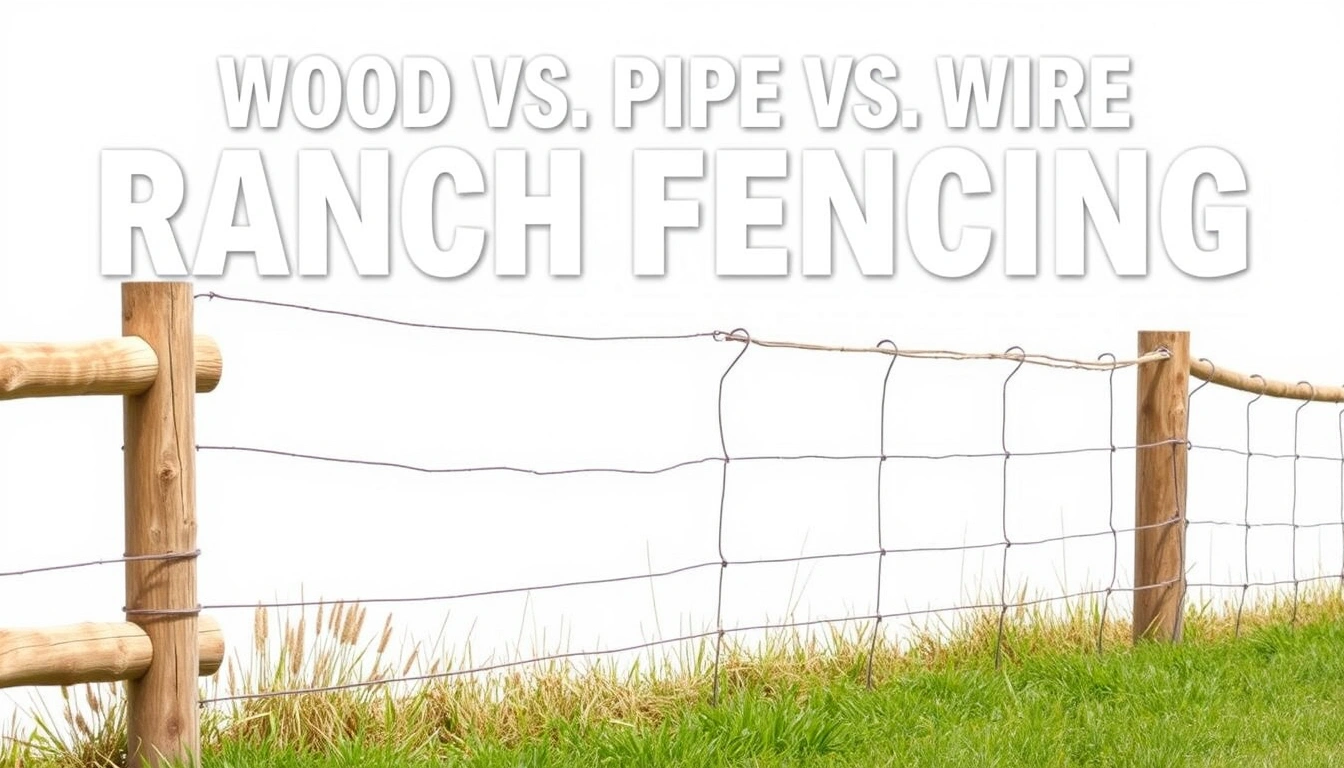
Money changes hands differently in each case. Wood puts more of it into materials and upkeep, pipe pushes the bill toward steel and durability, and wire spends it on coverage per foot. That one distinction ripples through nearly every other decision.
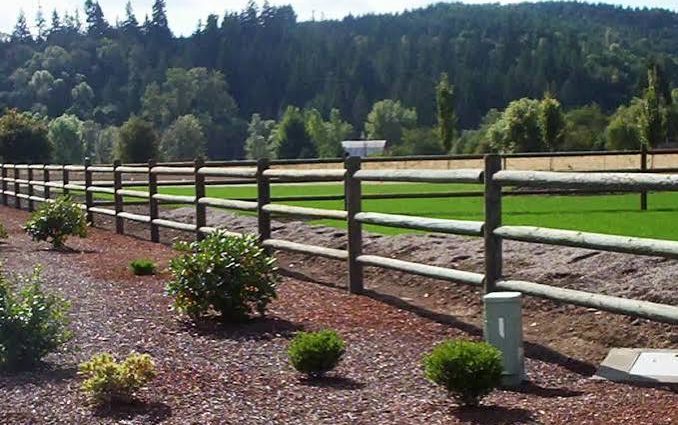
Wood ranch fencing usually means posts with rails or boards—often treated lumber, cedar, or painted pine—used where curb appeal and clear boundaries matter. For a specific layout, consult a fencing contractor or ag extension office, because post depth, species, and exposure can change the answer. USDA NRCS practice guidance and state extension publications both note that drainage, post setting, and material choice affect fence life. From a distance, it is easy to read, which helps with horses and with properties that need a finished look. Up close, though, the wear shows early. Warping, checking, rot at the base of posts, loose fasteners, and peeling paint are normal long-term concerns. For a property where the fence is part of the visual presentation, that may be a fair trade. For a remote perimeter, it can turn into expensive upkeep. No mystery there.
Pipe fencing is welded steel or continuous steel pipe, often chosen for horse runs, arenas, driveways, and high-contact areas. Many ranch owners like it precisely because it is the least forgiving when animals push on it. Steel does not split like wood, and it does not need paint every season the way older wood fences often do. The downside is obvious: steel costs more up front, can be unforgiving in a collision, and needs a decent coating or finish if you want corrosion resistance over time.
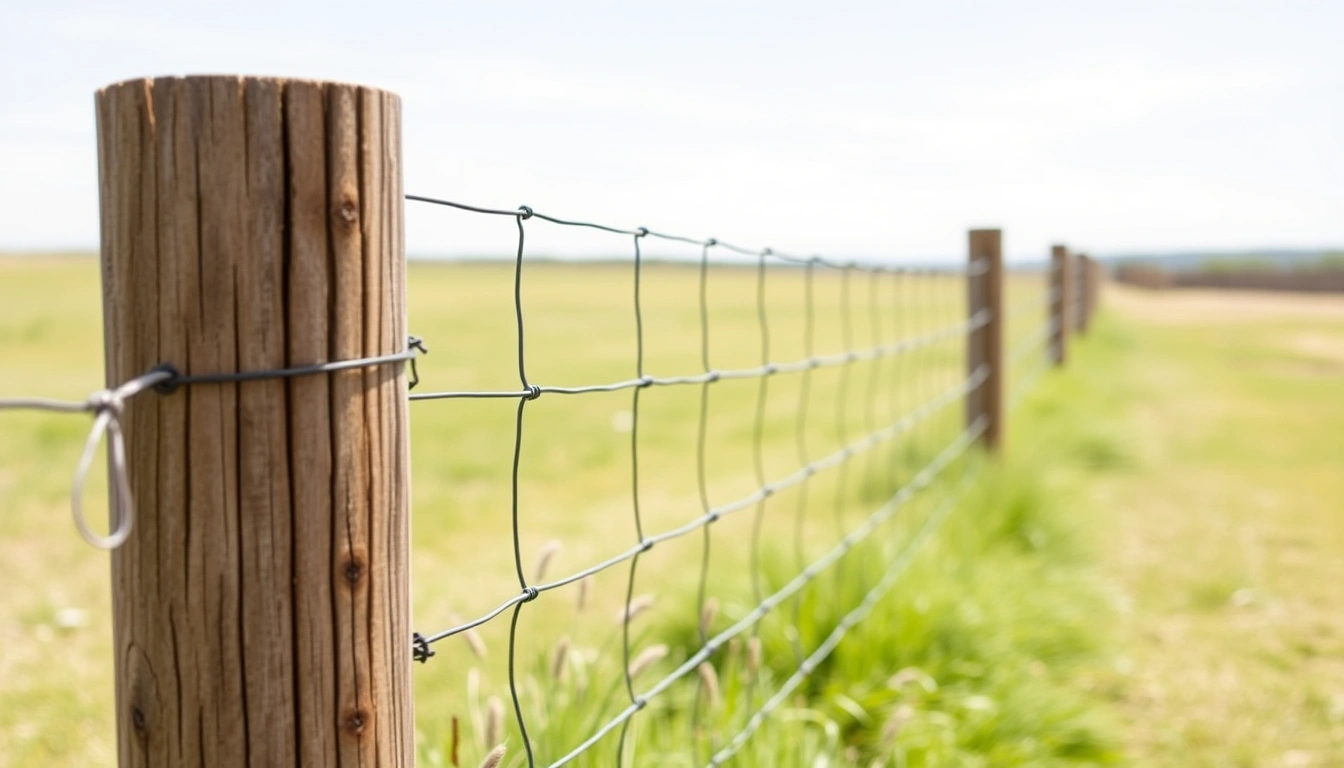
Wire fencing usually means high-tensile smooth wire, barbed wire, or woven wire, depending on the livestock and the goal. This is the fence for long runs, pasture division, and broad perimeter control. It is the most efficient way to cover distance, which is why it shows up so often on working acreage. Wire is also the least visually substantial. A horse can see it poorly if it is not marked, a large animal can tangle in the wrong design, and a careless installer can create a fence that fails at the posts long before the wire itself gives up. USDA NRCS and university extension guides both emphasize that post spacing, brace assemblies, and visibility markers matter as much as wire type.
Wood ranch fencing: who it suits, and who should skip it
Wood often makes sense when the fence is part boundary, part presentation, and part animal control. It suits horse properties, homesites, smaller acreages, and ranch entrances where a clean visual line matters. A 3-rail or 4-rail wood fence is easy to spot from a distance, which is a practical safety point for people and animals alike. It also gives you a solid psychological barrier; many animals respect it because they can see it.
Its weakness is maintenance. Put wood on damp ground, especially where grass and irrigation keep the bottom rails wet, and it will eventually start asking for repairs. Posts can rot at ground level, boards can crack from impact, and fasteners loosen with seasonal movement. If you are fencing miles of rough country, wood is usually a poor use of money. It is not my first pick for animals that lean hard or rub constantly, either, because the fence will wear, splinter, and need replacement parts.
Wood is a bad fit for buyers who want the lowest long-term maintenance or who are fencing a very large perimeter. It also struggles where weather swings hard between wet and dry or where drainage is poor. In those settings, wood can become a recurring repair line item within a few years, even with treated lumber, though the exact timeline depends on drainage, soil, and installation. Ask a local pro before assuming it will hold up. USDA and extension sources consistently note that moisture and ground contact shorten service life.
The honest side-by-side
Pipe wins on toughness, wood wins on appearance, and wire wins on scale. Simple. That is the cleanest comparison I can give without pretending one fence solves every problem.
| Criteria | Wood | Pipe | Wire | Winner for condition |
|---|---|---|---|---|
| Visibility to animals | Very high | Very high | Low unless marked | Wood or pipe for horses |
| Long perimeter coverage | Poor | Fair to poor | Excellent | Wire for acreage |
| Impact resistance | Moderate | High | Low to moderate | Pipe for pushy stock |
| Maintenance burden | High over time | Moderate | Moderate at posts, low in wire itself | Pipe for least fuss |
| Initial material complexity | Moderate | High | Low to moderate | Wire for simplest layout |
| Appearance at a driveway or home site | Strong | Strong and utilitarian | Weak | Wood for curb appeal |
| Suitability for horses | Strong if maintained | Strong | Only with the right design and visibility | Wood or pipe |
| Cost pressure on large acreages | High | High | Lower per foot | Wire for long runs |
Here is the detail that gets missed: the fence is only as good as its posts and corners. A wire fence with weak braces is a bad fence. A pipe fence with undersized posts is just expensive metal leaning in the dirt. A shallow-post wood fence will move long before the boards look worn. Physics does not care what you paid.
My take is straightforward. Large property? Wire is usually the practical answer. Smaller place, and appearance matters? Wood has a strong case. Animals likely to hit the fence, or you want fewer replacement parts? Pipe is the premium pick. Choosing by looks alone is where people get burned.
Pipe ranch fencing: the strongest case for it
Pipe is hard to beat for high-contact areas and for owners who value durability over softness. Think horse corrals, alleyways, working pens, gate lines, loading areas, and any place where a fence gets leaned on every day. Welded pipe sections and tube rails give you a fence that keeps its shape well and still looks intentional after years of sun and dust.
Its strength is not just that it is metal. The structure tends to stay straight when it is installed correctly with proper posts and bracing. That matters around gates, where wood can rack and wire can sag. It also matters in areas where a predictable boundary helps with handling animals. A horse fence made of pipe gives a clearer physical line than wire and usually fewer surprises than wood once weather and traffic start working on it.
Cost, though, is the catch. Pipe takes a lot of steel, and it is not the fence I would choose where a vehicle is likely to clip it or where a large animal collision happens often. Steel can bend. And a bent pipe panel is not a quick cosmetic fix. Corrosion is another long-term issue if the finish is weak or damaged. In wet climates or around manure and irrigation splash, that matters.
Pipe is not for the buyer whose first priority is budget or who is fencing many miles of boundary. It is also not the softest choice for animals that may bolt into a fence line. If the animal hits it hard enough, the fence may hold—but the animal may not appreciate the result. Ouch.
Wire fencing: the practical answer for acreage
Wire wins when you need to fence a lot of ground without draining the entire project into the fence line. That is why it shows up so often on pasture boundaries and cross-fencing. It covers distance efficiently, and it lets you divide land into useful grazing sections without the visual heaviness of wood or the material weight of pipe. In many ranch settings, that efficiency is measured in feet: a mile of fence is 5,280 feet, so even small per-foot savings matter.
The best wire systems are the ones matched to the stock, and extension guides are clear that there is no single wire layout for every animal. Smooth high-tensile wire can work well when installed with proper tensioning, end assemblies, and visibility markers. Woven wire makes more sense for smaller livestock or where you want a tighter barrier. Barbed wire still exists for certain cattle applications, but it is not my first suggestion for horses and it deserves caution around any animal that can become entangled or injured. USDA NRCS and university extension programs both recommend choosing wire based on species, pressure, and handling goals.
Wire’s weak point is the install. The wire itself may be strong, but the system fails at weak posts, bad tensioning, poor corner bracing, or bad visibility. It is also the least forgiving visually. A person can walk into it; a horse can misread it; a deer can run through it. That makes it a poor choice for high-traffic human areas and for places where the fence doubles as a decorative line.
Wire is not the right answer when presentation matters at the home site, when you need a fence to stop casual pressure from animals that rub and lean, or when you want an obvious barrier for horses and visitors. It is the right answer when you need acres contained and are willing to do the install correctly.
Which fence is best for horses, cattle, and mixed livestock?
Pipe is often the safest all-around choice for horses, wood is a close second if maintained, and wire is best only when the design fits the animal. That is the practical ordering I would give most buyers.
For horses, visibility matters as much as strength. Wood rails and pipe rails are easy for horses to read, which is why they are so common. Wire can work, but only when it is designed with horse safety in mind: good visibility, correct spacing, and no sloppy tension. I would not choose plain wire for a horse property simply because it is cheaper.
For cattle, wire often makes the most sense, especially on perimeter fencing and broad pasture division. Cattle do not need the same visual refinement as horses, and they are often better handled by an efficient, well-braced wire system. Pipe has a role in handling pens and loading areas. Wood is less common for pure cattle use unless the property also has an architectural or residential priority.
For mixed livestock, the answer usually splits by zone. Use pipe or wood near the barn, house, gates, and handling areas. Use wire on the long perimeter and interior pasture divisions. That mixed approach is usually more sensible than forcing one fence type to do every job.
Exception scenarios that change the answer
Wood, pipe, or wire can all lose their edge in the wrong setting. A few cases flip the verdict fast.
First, a small, visible frontage near a house can make wood beat both pipe and wire even when it costs more to maintain. A 3-rail wood fence gives a cleaner residential look than a steel run of pipe and a much stronger appearance than wire.
Second, if the area is flood-prone or regularly saturated, wire with properly chosen posts may outlast wood because wood fights decay at ground contact. I would still want the post design and brace work done carefully, because wet ground punishes every fence type.
Third, if you have animals that slam gates or rub hard on boundaries, pipe becomes the clear favorite near those pressure points. It is not necessary everywhere, but it is the better material where impact is routine.
Fourth, when the property is so large that even a modest increase in cost per foot becomes painful, wire can be the only sensible answer. That is not a compromise; it is the right tool for the job.
What should you buy if you only want one answer?
Choose pipe if your top priority is durability around horses, handling pens, or high-contact areas. Choose wire if your top priority is fencing a lot of acreage without overspending on materials. Neither works well if your fence line sits in a decorative setting and you are not willing to maintain wood, because a neglected wood fence looks tired fast and stops feeling like an upgrade.
That is the cleanest recommendation I can make. Pipe is the right choice for buyers who want a fence they can trust around pressure and movement. Wire is the right choice for buyers who need coverage, not presentation. Wood is the right choice only when appearance and visibility matter enough to justify the maintenance.
What I would ask before deciding
I would ask three questions before spending a dollar on any of these fences. Is this for horses, cattle, or both? Is the fence mostly perimeter, mostly cross-fencing, or mostly around the home site? And am I trying to build something that looks finished, or something that simply works?
Answer “horses,” “high-traffic handling area,” and “works for decades,” and pipe climbs fast. Answer “many acres,” “perimeter,” and “practical first,” and wire usually wins. Answer “home site,” “frontage,” and “I want it to look good from the road,” and wood becomes the serious contender.
Frequently asked questions
Is wood fence better than pipe fence for horses?
Wood is better only if you want a softer visual line